

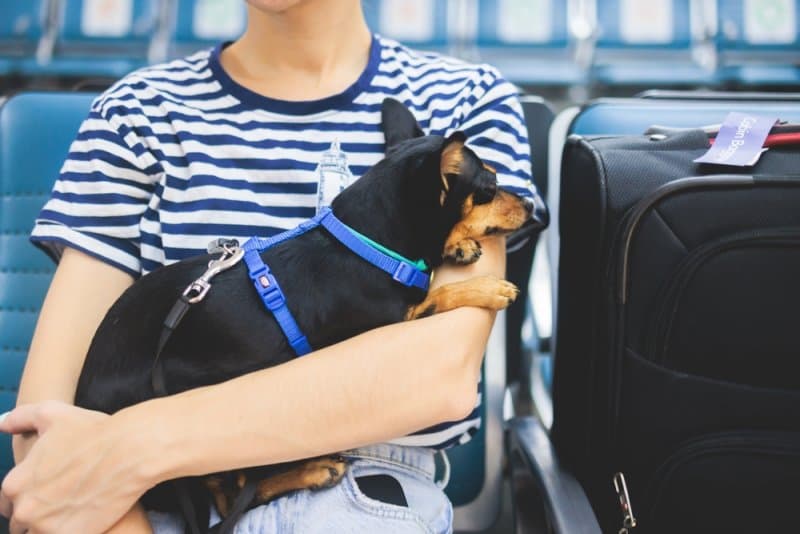
Travel gets more complicated when a dog or cat comes along. Still, flying with a pet does not need to become a stressful airport puzzle. A little prep matters more than buying extra travel gear. Airlines set their own limits for carriers, breeds, and fees plus paperwork, so details can change from one flight to another. Your pet’s comfort matters too.
A calm animal at home may react differently around security lines, engines, strangers, or a cramped carrier. Start early. Check the details twice. In this blog, you’ll find practical tips for flying with a pet, from cabin rules and carriers to costs, documents, dogs, cats, and flight-day comfort.
Flying with a pet gets easier when the important decisions are made before travel day, not while standing at the check-in desk.
Before booking, read the airline pet travel rules for your exact route. Flying with pets is not handled under one universal US policy. Airlines can set limits around pet type, age, carrier dimensions, cabin capacity, routes, and weather restrictions for checked or cargo animals.
Call the airline when something looks unclear. A ticket confirmation does not automatically confirm your pet’s place. Flying with a pet often requires a separate reservation because airlines may limit how many animals are allowed in each cabin.
Pet carrier requirements for flights usually focus on whether the carrier can fit safely under the seat when the animal travels in the cabin. The pet must also fit comfortably enough to remain inside during travel.
Measure the carrier before buying the flight. Then check the airline pet travel rules again because aircraft can differ. When flying with pets, a carrier that worked on one airline may be too large on another.
Dogs and cats can react very differently to airports, carriers, noise, movement, plus unfamiliar people. Preparation should match the animal.
When flying with a dog, introduce the carrier well before departure. Put treats or a familiar blanket inside, then allow the dog to enter without pressure. Short carrier sessions can gradually become longer ones.
Exercise can help too. Before flying with a pet, give an active dog a normal walk and bathroom break. Avoid suddenly exhausting the animal. Flying with a dog is easier when its normal routine has not been completely disrupted.
Flying with a cat can be tricky because many cats already connect carriers with vet visits. Leave the carrier open at home for several days, sometimes weeks. Add familiar bedding and occasional treats.
Can you bring a cat on a plane in a carry-on carrier? Often yes, when airline pet travel rules permit cats in the cabin and the carrier meets size rules. Flying with a cat still requires advance confirmation with the airline.
Flying with a pet in the cabin keeps the animal close, but size, airline policy, route, and other restrictions determine whether it is possible. Should pets fly in the cabin or in the cargo hold?
Cabin travel is generally the more direct choice for small pets when permitted. Larger animals may not qualify, while some airlines do not transport ordinary pets in cargo at all.
| Factor | Flying With a Pet In Cabin | Cargo Travel |
|---|---|---|
| Pet location | Under the seat | Separate aircraft area |
| Best suited for | Small eligible pets | Larger eligible animals |
| Carrier | Small airline-compliant carrier | Airline-approved transport kennel |
| Owner access | Pet remains nearby | No access during flight |
| Availability | Limited pet spaces | Airline- and route-dependent |
For example, a 10-pound cat may fit within pet carrier requirements for flights in the cabin. A 60-pound dog probably will not. Never assume cargo is automatically available; check the current airline pet travel rules first.
Flying with pets adds costs beyond the passenger ticket, while paperwork can depend on the destination as much as the airline. How much does it cost to fly with a pet?
Airline pet travel fees vary widely, but US cabin fees commonly add roughly $95 to $150 each way on major carriers. International routes, cargo arrangements, vet visits, approved carriers, or destination paperwork can push the total much higher.
Check whether airline pet travel fees apply per flight segment or each direction. If two airlines are involved, separate charges may apply. Flying with a pet becomes expensive quickly when these small charges stack up.
What documents do you need when flying with a pet? Requirements depend on the airline and destination. You may need vaccination records, a veterinary health certificate, identification information, or destination-specific entry documents.
Domestic trips can be simpler, yet do not assume paperwork is unnecessary. International flying with pets can involve stricter deadlines, microchip requirements, vaccinations, import permits, or government endorsements. Start checking several weeks or months ahead.
Pet carrier requirements for flights are not only about passing airline checks. The carrier becomes your pet’s small travel space for several hours.
What size pet carrier is allowed on an aeroplane? There is no single size accepted by every airline. For flying with a pet in the cabin, the carrier generally must fit under the seat while meeting that carrier’s stated dimensions.
Choose ventilation, secure closures, and a leak-resistant base. Add an absorbent liner. When flying with a cat or small dog, familiar bedding can help, but avoid stuffing the carrier with bulky toys that reduce usable space.
A pet cannot understand airport announcements or turbulence. Familiar routines can make the strange parts less intense.
How do you keep a pet calm during a flight? Carrier training is the first step. Keep your own movements controlled, avoid unnecessary opening of the carrier, plus bring familiar-smelling material when appropriate.
Do not give sedatives simply because flying with a dog or flying with a cat seems stressful. Medication decisions should be discussed with a veterinarian. The pet’s health, age, breed, flight length, and medical history matter.
How do you prepare a pet for its first flight? Practice handling before the trip, including getting in and out of the carrier calmly. At US airport security, pets generally need to come out of their carriers while the empty carrier is screened.
Use a secure harness or leash where appropriate. Flying with a pet becomes much harder if a frightened animal escapes in a busy checkpoint. Ask security staff for assistance if you are concerned about safely removing the animal.
Travelling with a pet works out best when you start getting ready before you even buy your ticket. Look up the airline’s pet policies, double-check the fees, measure your carrier so there are no surprises, and round up any documents you’ll need ahead of time. If you have a dog, expect to spend more time on exercise and handling; cats usually need a slower approach to carrier training.
If your animal is small, flying in the cabin is often smoother—if the airline allows it. Most headaches happen when people assume things: they show up with the wrong carrier, forget paperwork, or don’t secure a pet reservation. In the end, flying with a pet is still regular travel. You’re just planning for a passenger who needs a little extra attention.
Try to stick to your pet’s usual feeding routine and don’t make sudden changes right before you fly. Talk to your vet about timing based on your pet’s health, age, and how long the flight lasts—just make sure they stay hydrated.
It depends on the lounge and the airport. Even if you can bring your pet in the cabin, many lounges require animals to stay inside their carriers.
Sometimes, airlines allow two small animals of the same species in one carrier, but the rules vary widely. Always check the carrier requirements for your specific flight instead of guessing.
Ask airline staff about pet relief areas and rules for rebooking, plus any extra restrictions that come with long delays. Keep essential supplies with you, not in checked bags, just in case you need them.
Usually, yes. Just remember that layovers add time and possible complications. Check everything—pet fees, carrier rules, airport policies, and pet reservations—for every leg of your trip before you book.
This content was created by AI