

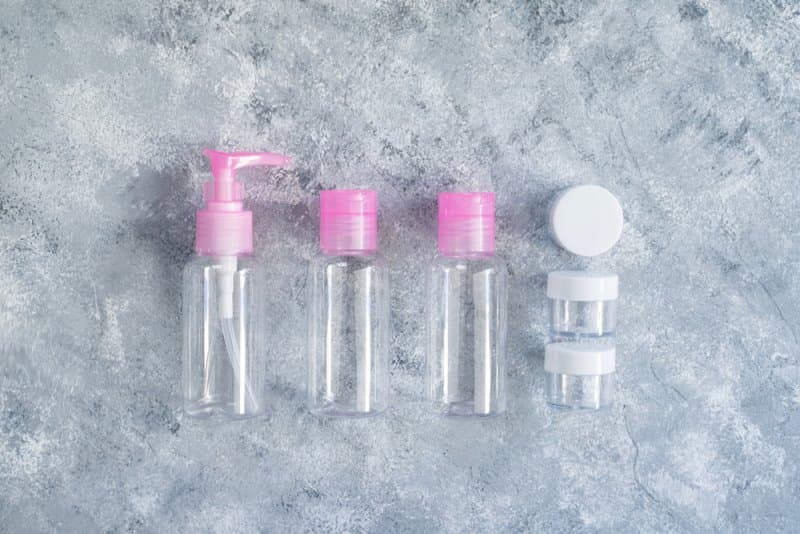
Travel-size bottles look simple until you are standing over an open suitcase wondering whether toothpaste, sunscreen, face cream, or a half-used shampoo bottle counts as a liquid. Airport security makes that decision fairly strict. Knowing the TSA liquids rule before packing saves space, cuts repacking at the checkpoint, and helps you decide what belongs in checked luggage.
The basic system is small containers inside one clear bag, with limited exceptions for necessary items. It is not complicated, but small details matter. In this blog, you will see how the TSA liquids rule works and how to use it to pack a carry-on with less waste and fewer security problems.
The TSA liquids rule is more useful as a packing limit than a security rule you memorise at the airport. It forces you to choose what you actually need.
The standard TSA liquid limit is 3.4 ounces, or 100 millilitres, per container. The carry-on liquids size limit applies to liquids, gels, creams, aerosols, and pastes placed in your hand luggage.
A 6-ounce bottle containing only 2 ounces of shampoo still does not meet the TSA liquid limit. Container capacity matters, not the amount left inside. This is where many travellers get caught.
The TSA 3-1-1 rule can be read as 3.4-ounce containers, 1 quart-sized bag, and 1 bag per passenger. All standard travel liquids need to fit inside that single bag.
So, what is the TSA 3-1-1 liquids rule? It is basically a compact packing framework. Following the TSA 3-1-1 rule also stops toiletries from quietly taking over half your carry-on.
The TSA carry-on liquid rules cover more than drinks. Toiletries that spread, squeeze, spray or pour usually need to be treated as liquids.
Common liquids allowed in carry-on luggage include shampoo, conditioner, perfume, liquid foundation, mouthwash, lotion and travel-size hair products, provided normal containers meet the carry-on liquids size limit.
Can you bring shampoo and conditioner in a carry-on bag? Yes, when each container is 3.4 ounces or smaller and fits within the required bag. Solid shampoo is another option because it reduces the number of containers competing for space.
The TSA liquid restrictions also cover products that do not look obviously liquid. Toothpaste is treated as a paste, so does toothpaste count as a liquid under TSA rules? Yes, for carry-on screening purposes.
Can you bring sunscreen in your carry-on luggage? Yes, but regular liquid, cream, gel, or aerosol sunscreen generally needs to meet the TSA liquid limit unless a specific exception applies. Small sunscreen sticks can make packing easier.
Knowing where the TSA liquids rule applies stops you from shrinking every toiletry bottle for no reason.
| Packing Issue | Carry-On Bag | Checked Bag |
|---|---|---|
| Standard liquid container | 3.4 oz or less | Larger sizes are generally possible. |
| Quart-sized bag | Required for standard liquids | Not required |
| Full-size shampoo | Usually no | Generally yes. |
| Drinks through checkpoint | Restricted | Different baggage rules apply. |
| Security convenience | More limits | More packing freedom |
The TSA 3-1-1 rule mainly shapes what travels through the passenger checkpoint. Other safety restrictions can still apply to checked baggage, especially aerosols or hazardous products.
For carry-on-only travel, the TSA carry-on liquid rules reward smaller routines. A four-day trip probably does not need full bottles of cleanser, shampoo, conditioner, lotion plus hair products.
Try decanting only what you need. This makes liquids allowed in carry-on luggage easier to organise, while leaving space for products you cannot replace easily after arrival.
Most problems with TSA liquid restrictions come from assuming a familiar item does not count or focusing on how much product remains rather than bottle size.
Suppose you pack five containers: 3-ounce shampoo, 3-ounce conditioner, 1-ounce serum, 3.4-ounce sunscreen, and 2-ounce toothpaste. Each meets the carry-on liquids size limit, assuming they fit into the required quart-sized bag.
Swap that shampoo for a 5-ounce bottle with only an ounce left inside. Now it fails the standard TSA liquids rule because the container itself exceeds 3.4 ounces.
How many ounces of liquid can you bring on a plane? For standard liquids going through security, each container generally cannot exceed 3.4 ounces. Multiple compliant containers are possible when they fit in the single quart-sized bag.
Can you bring a water bottle through airport security? An empty reusable bottle can normally go through. Fill it after screening. A bottle containing ordinary water generally cannot pass the checkpoint when it exceeds the TSA liquid limit.
Not everything has to squeeze into the standard bag. TSA liquids rule exceptions cover certain medically necessary and passenger-care items.
What liquids are exempt from the TSA 3-1-1 rule? Medically necessary liquids can be permitted in quantities above the normal limit, subject to screening. Formula, breast milk, and related child-feeding liquids also receive special handling.
These TSA liquid rule exceptions matter because forcing necessary liquids into tiny containers would be impractical. Tell the security officer about exempt items and keep them accessible instead of burying them deep in the bag.
Some liquids allowed in carry-on luggage may therefore exceed the normal TSA liquid limit when they qualify for an exception. Extra screening may happen. That is normal.
The TSA liquids rule exceptions should not be treated as spare space for regular toiletries. Your oversized moisturiser does not become exempt simply because the quart bag is full.
Smart packing is mostly about removing small points of friction before you reach the checkpoint.
Use the TSA 3-1-1 rule as a final check rather than trying to sort bottles at the airport. Keep the liquid bag somewhere reachable.
Do liquids have to fit in one quart-sized bag? Standard liquids covered by the TSA carry-on liquid rules generally do. If the bag will not close comfortably, you are probably carrying too much.
The TSA liquids rule becomes easier once you stop treating every toiletry the same. Check bottle capacity first, move full-size products to checked luggage, and use solids where they make sense, plus separate genuine exceptions before leaving home. The TSA 3-1-1 rule gives you a fixed boundary, which is useful when carry-on space is already tight.
The TSA liquid limit also prevents that familiar airport-floor repacking session when an oversized bottle gets flagged. Know the TSA liquid restrictions, respect the carry-on liquids size limit, and keep exempt items accessible. A little sorting at home makes the airport part much less annoying.
Frozen items may pass when they are completely frozen during screening. If they are partly melted or slushy, liquid screening requirements can become relevant.
Makeup wipes are generally treated differently from bottled liquid toiletries. They can be a useful substitute when the quart-sized bag is already crowded.
Yes. Small containers can follow normal limits, while medically necessary quantities may receive different treatment and additional screening.
Yes, mascara is generally treated as a liquid or gel for screening. Keep it with your other standard carry-on liquids when packing.
Certain duty-free liquids may be permitted under specific conditions, including secure packaging and purchase requirements. Keep receipts and packaging intact during connections.
This content was created by AI